

AI tools are powerful — but only if you know how to guide them.
That’s where prompt engineering comes in.
If you’ve ever typed something into ChatGPT and thought, “That’s not what I meant…”, you’ve already experienced why prompts matter.
This beginner guide explains what prompt engineering is, how it works, and how to start writing better prompts immediately — without technical knowledge.
For a deeper understanding of how AI systems connect and exchange information, check out our breakdown of how AI tools work together.
What Is Prompt Engineering?
Prompt engineering is the process of structuring instructions so an AI system produces better, more accurate outputs.
In simple terms:
A prompt is an instruction. Prompt engineering is designing that instruction correctly.
AI tools don’t “think” like humans. They predict patterns based on the text you give them. The clearer and more structured your input, the better the output.
Bad prompt:
Write about business.
Better prompt:
Write a 700-word beginner guide explaining how to start a freelance copywriting business in 2026. Include steps, tools needed, and common mistakes.
Same tool. Completely different result.
If you’re building AI prompts as part of larger workflows, our AI tool stack guides will help you design repeatable processes that deliver consistent results.
Why Prompt Engineering Matters
AI models respond directly to structure, context, and specificity.
If your input is vague:
- The output will be generic.
- The tone may be inconsistent.
- Important details will be missing.
If your input is clear:
- The structure improves.
- The tone aligns.
- The results become usable.
Prompt engineering isn’t about “hacking” AI.
It’s about clarity.
How AI Interprets Your Prompt

Most AI systems follow a basic pattern:
Input → Context → Pattern Prediction → Output
Your prompt becomes the “context layer” that shapes the prediction.
Think of it like giving directions:
- “Go somewhere nice.” → Unclear.
- “Drive to the nearest Italian restaurant open past 9pm within 10 miles.” → Clear.
AI behaves the same way.
To see how structured inputs improve outputs across use cases, read our practical AI workflow examples for beginners.
The 4 Core Elements of a Strong Prompt
For beginners, you don’t need complex frameworks. Start with these four components:
1. Role
Tell the AI who it should act as.
Act as a marketing strategist.
Act as a career coach.
Act as a YouTube script writer.
This sets tone and perspective.
2. Task
Be explicit about what you want created.
Write a blog post.
Create a checklist.
Draft a cold email.
Avoid vague instructions like “Explain this better.”
3. Context
Provide background information.
This is for beginners.
The audience is small business owners.
The goal is SEO traffic.
More context = better alignment.
4. Format
Specify output structure.
Use bullet points.
Include H2 subheadings.
Write 800 words.
Keep tone professional.
AI performs significantly better when format is defined.
A Simple Prompt Template for Beginners
If you’re just starting, use this workflow:
Act as a [role].
Create a [specific task].
The audience is [who].
Keep tone [tone].
Format using [structure requirements].
Example:
Act as a financial advisor. Create a beginner-friendly guide explaining how index funds work. The audience is people in their 20s. Keep tone simple and educational. Use H2 subheadings and bullet points.
This alone improves outputs dramatically.
After mastering basic prompts, explore how to scale them inside real-world systems with our guide to tool stacks for automation and efficiency.
Common Beginner Mistakes
Being Too Short
One sentence prompts produce surface-level responses.
Not Defining Audience
AI doesn’t know who it’s speaking to unless you tell it.
No Format Instructions
If you don’t specify structure, the AI guesses.
Expecting Perfection on First Try
Prompt engineering is iterative. Refining the second or third prompt is normal.
Iteration: The Real Secret
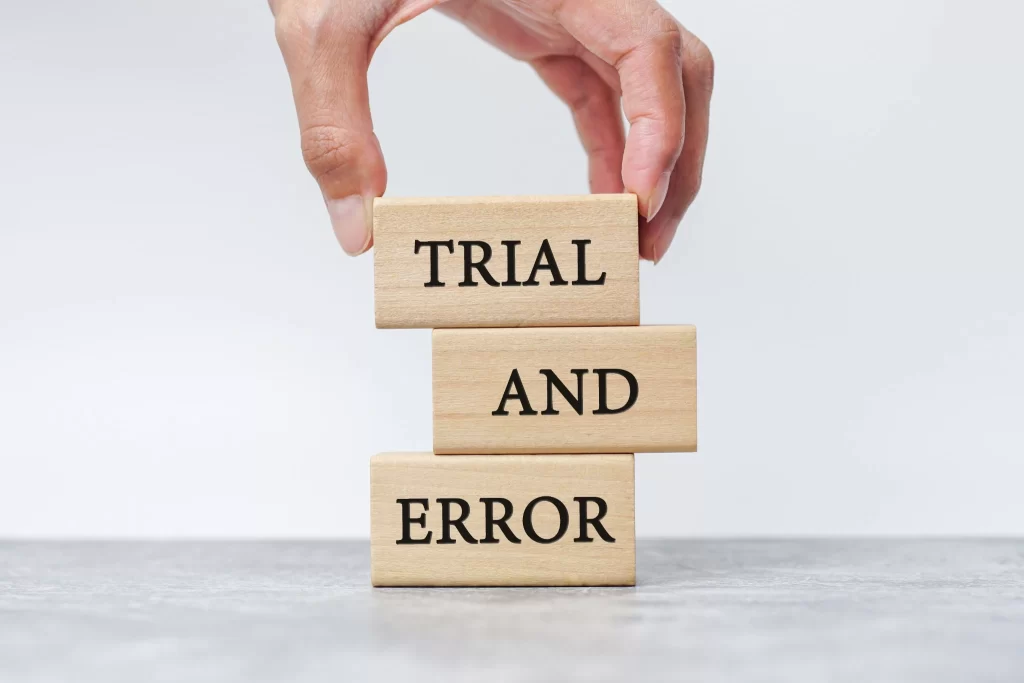
The best results usually come from refining:
- Generate output.
- Identify what’s missing.
- Add constraints or clarification.
- Regenerate.
Example refinement:
First prompt:
Write a blog about freelancing.
Second prompt:
Rewrite this to be more actionable. Add 5 concrete steps and include tools beginners can use.
The difference is substantial.
When you want to link prompt engineering to content quality and search performance, our AI content creation resources offer clear, step-by-step examples.
Advanced Tip (When You’re Ready)
Once comfortable, you can layer:
- Constraints (“Do not use buzzwords.”)
- Examples (“Model tone after Harvard Business Review.”)
- Step-by-step reasoning (“Explain your logic before final answer.”)
But beginners should master clarity first.
Where Prompt Engineering Is Used
Prompt engineering applies across:
- Blog writing
- Email marketing
- Social media
- Coding
- Image generation
- Research
- Business automation
It’s becoming a foundational digital skill.
Is Prompt Engineering Technical?
Not at the beginner level.
You don’t need programming skills.
You need:
- Clear thinking
- Specific instructions
- Iteration
That’s it.
AI tools are not magic.
They are responsive systems.
The better your instructions, the better your outcomes.
Prompt engineering is less about tricks — and more about structured communication.
Once you understand that, everything improves.
To avoid common AI usage mistakes when writing prompts, make sure to include clear roles, context, and formatting like we explain in our AI mistakes to avoid guide.
Better AI Prompts FAQ: Tips for Getting Professional Results
It’s the practice of writing better instructions so AI tools produce better results.
No. Beginners can improve outputs just by adding clarity and structure.
Yes. Advanced prompt design is becoming valuable in AI consulting, automation, and enterprise workflows.
Long enough to be clear. Short enough to stay focused. Specificity matters more than length.
Yes. Prompt engineering directly improves AI writing quality by increasing clarity, structure, and relevance. When you define the role, audience, goal, and format in your prompt, AI responses become more specific and usable. Most generic AI writing problems come from vague instructions, not weak models.
A basic prompt is short and open-ended, such as “Write about marketing.” An engineered prompt includes role, task, context, and formatting instructions. For example, “Act as an SEO strategist and write a 1,000-word beginner guide to digital marketing with H2 subheadings and actionable steps.” The second version produces more structured and higher-quality output.
A prompt should be long enough to provide clarity but focused enough to avoid confusion. There is no perfect word count. What matters is specificity. Clear role definition, task instructions, audience context, and formatting guidance are more important than length alone.
The Prompt Lexicon: Mastering AI Instructions
| Term | Lab Concept |
|---|---|
| Persona | The “Role” you assign the AI. Telling it to “Act as a Senior Editor” changes its tone and the quality of its advice immediately. |
| Zero-Shot | Asking the AI to do a task without giving it any examples. It relies entirely on its pre-trained knowledge. |
| Few-Shot | Providing 2-3 examples within your prompt. This is the fastest way to improve AI accuracy. |
| Chain of Thought | Asking the AI to “think step-by-step.” This forces the model to show its logic, reducing errors in complex tasks. |
| Constraints | The “No-Go” zones for AI. For example: “Do not use emojis” or “Keep the summary under 100 words.” |
| Temperature | A setting that controls creativity. High temperature = Wild & Creative; Low temperature = Focused & Factual. |
| System Prompt | The background instructions that stay active throughout a whole session. Essential for maintaining a consistent brand voice. |
| Delimiters | Special characters like quotes (“”) or triple backticks (“`) used to separate your instructions from the data you want the AI to process. |
 Alex Carter